Chimney Repairs Cumbria
Expert Chimney Repointing, Flashing, Cowl Fitting and Stack Repairs Across South & West Cumbria
Why Chimney Problems Are So Common in Cumbria
Chimneys Take the Worst of Cumbrian Weather
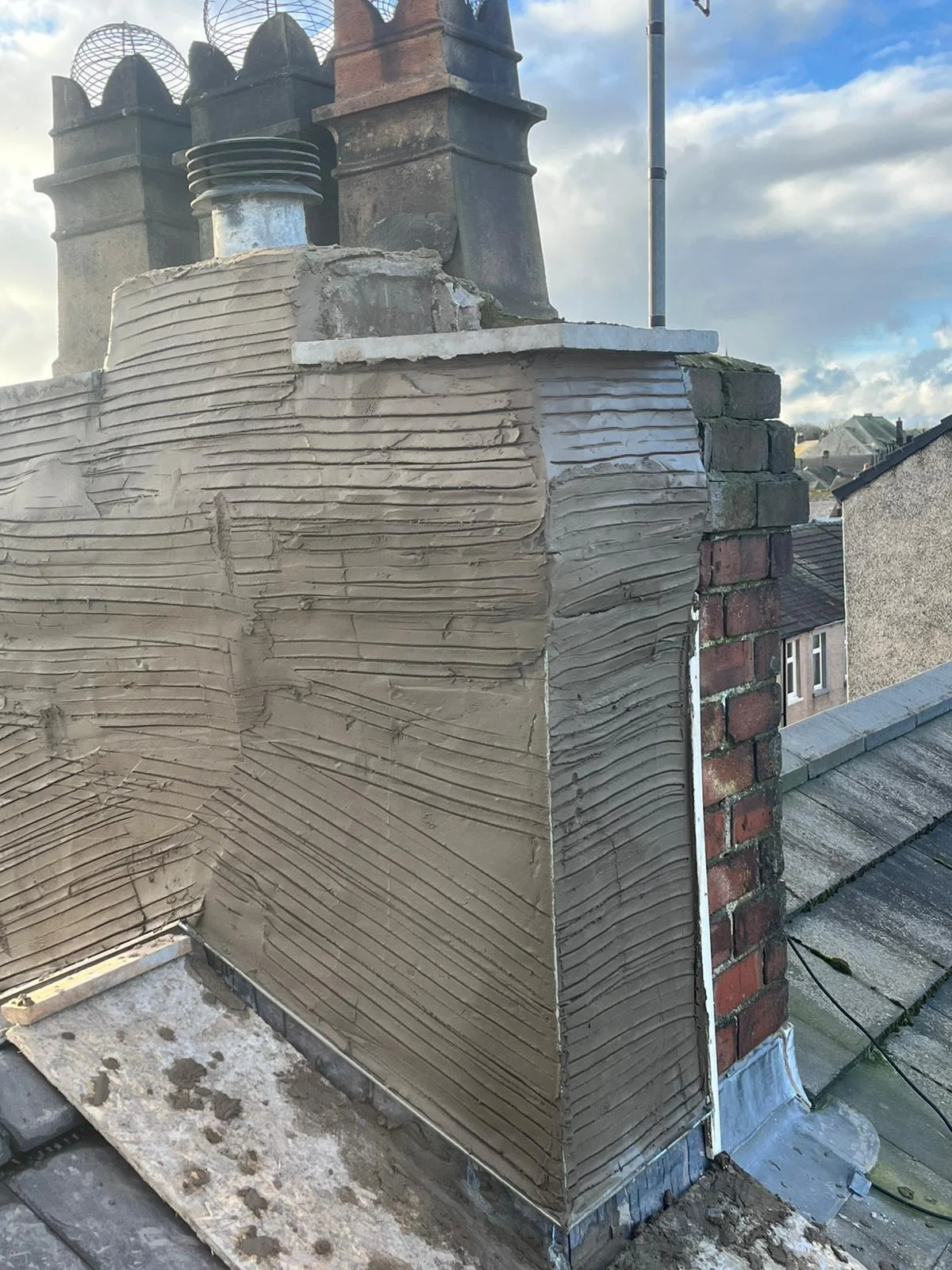
A chimney stack is the most exposed part of any building. It sits above the ridge line, unshielded from wind, rain, frost, and in coastal areas, salt-laden air. Across South and West Cumbria, where annual rainfall can exceed 2,000mm and winter temperatures regularly drop below freezing, chimney masonry and mortar deteriorate significantly faster than in more sheltered parts of the country. Water penetrates mortar joints, freezes overnight, and expands, cracking the pointing and loosening bricks or stonework with each successive cycle. Left unchecked, this process leads to structural instability, damp penetration into bedrooms and loft spaces, and in severe cases, partial chimney collapse during storms.
Flashings Are the Most Common Failure Point
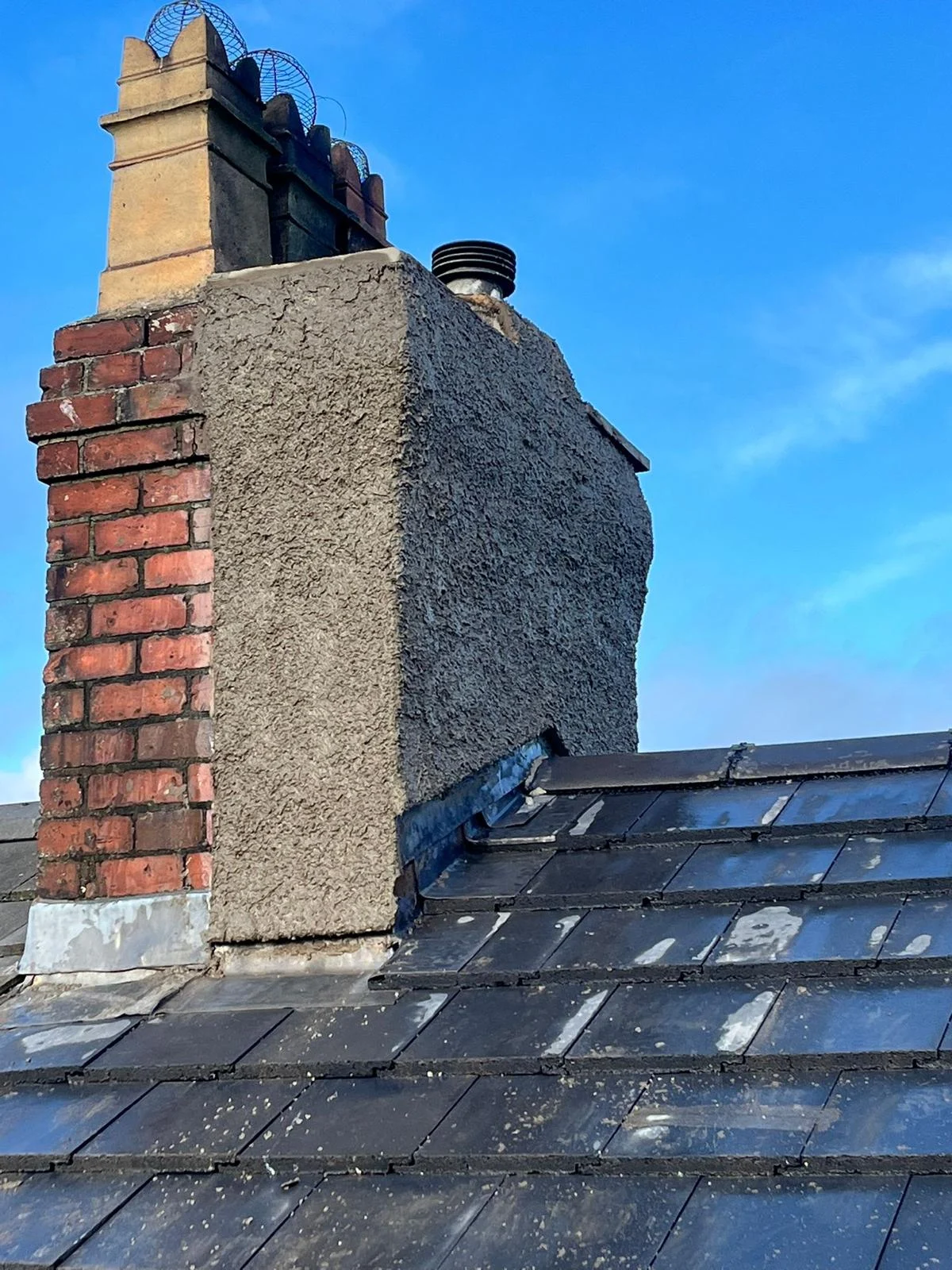
The junction between a chimney stack and the surrounding roof tiles or slates is sealed with lead flashings, including step flashings up the sides, a back gutter behind the stack, and an apron at the front. Over time, lead oxidises, cracks develop at bends, mortar fillets shrink away from brickwork, and wind lifts edges that were not properly dressed into chase joints. The result is persistent dampness that appears on chimney breast walls inside the property, often misdiagnosed as condensation when the real cause is failed external flashings. We see this on properties of every age across Cumbria, from Victorian terraces in Barrow to 1970s estates in Kendal.
Structural Chimney Problems Need Prompt Attention
A chimney stack that has begun to lean, develop cracks through the masonry, or shed bricks is a safety hazard that requires immediate professional assessment. High winds can bring down a weakened stack onto the roof below, causing catastrophic damage and putting occupants at risk. We carry out full structural inspections including internal flue condition checks, and where stacks are beyond economical repair we provide safe dismantling and removal services. For stacks that are structurally sound but cosmetically deteriorated, a full repoint with appropriate lime or cement mortar restores both appearance and weather resistance.
Qualified, Insured, and Equipped for Height
Chimney work requires specialist access equipment and a head for heights. Our team is City & Guilds certified, fully insured for working at height, and experienced with scaffolding, tower scaffolds, and roof ladders on every type of Cumbrian property. We are members of the Lancashire County Council Safe Trader Scheme and reviewed on Bark. Visit our roofer Cumbria hub for more about our team, or browse our roof repairs page to see the full range of work we undertake above and around the roofline.
Our Chimney Repair Services

Chimney Repairs FAQs
Look for mortar joints that have receded more than 10mm from the face of the brickwork, visible cracks running through the pointing, loose or sandy mortar that crumbles when prodded, and damp patches appearing on chimney breast walls inside the property. From ground level you may also notice moss or plant growth in the joints, which indicates moisture retention. Our free drone inspection provides a definitive close-up assessment of every joint on the stack.
The main causes are thermal expansion and contraction of the lead sheet over seasonal temperature changes, corrosion from acidic rainwater and flue gases, mechanical damage from wind lift or antenna installations, and poor original workmanship where the lead was not properly dressed into chase joints or sealed with appropriate sealant. In Cumbria, the combination of high moisture levels and frequent freeze-thaw cycles accelerates all of these deterioration mechanisms.
In most cases, repointing and reflashing a structurally sound chimney is significantly cheaper than full removal, which requires scaffolding, careful dismantling, making good the roof covering, and disposing of the masonry. However, if the stack is severely deteriorated, leaning, or no longer serves any purpose, removal can eliminate an ongoing maintenance liability. We always provide quotations for both options so you can make an informed decision.
Yes, and it very frequently is. Failed lead flashings, deteriorated mortar joints, cracked render, and missing or damaged chimney pots all allow rainwater to enter the stack and track down inside the flue or through the masonry to emerge as damp patches on internal walls. This is often misidentified as condensation. A thorough external inspection of the chimney usually reveals the true source of the problem.
Yes. We supply and install a full range of cowls and terminals to suit active flues, disused flues, gas flues, and solid fuel flues. Anti-downdraught cowls help prevent smoke blowback in windy conditions, bird guards stop jackdaws and pigeons nesting in the flue, and capping plates with ventilation slots seal unused flues while allowing airflow to prevent condensation build-up inside the stack.
For older properties built with lime mortar, repointing should always use a compatible lime-based mix that allows the masonry to breathe and flex with thermal movement. Using hard cement mortar on soft brickwork or stonework traps moisture and can cause the face of the bricks to spall and disintegrate. For modern chimneys built with engineering bricks and cement mortar, a cement-based repointing mix is appropriate. We always match the mortar specification to the age and construction of the stack.
The cost depends on the size of the stack, the extent of deterioration, the mortar type required, and the access arrangements. A straightforward repoint of a single-flue stack on a terraced house with existing scaffold access might cost a few hundred pounds, while a large double-flue stack on a detached property requiring full scaffolding will be more substantial. We provide free, detailed quotations with no hidden costs and no obligation to proceed.
Recent Chimney Work Around Cumbria

Chimney Repoint in Broughton
Full repoint of a three-flue stone chimney stack on a Victorian end-terrace using NHL 3.5 lime mortar. All lead step flashings replaced and chimney pots re-bedded with new haunching. View this project
Chimney Flashing Repair in Keswick
Replacement of failed back gutter and step flashings on a detached lakeside property. New code 5 lead dressed into raked-out chase joints and pointed with lead sealant. View this project
Chimney Stack Removal in Grange
Safe removal of a redundant chimney stack that had become structurally unstable. Stack dismantled to below roof level, capped with ventilated slab, and roof re-slated to match. View this project
Local Chimney Repair Specialists Covering All of South & West Cumbria
Mr Roofer UK provides expert chimney repointing, flashing, and repair services across the whole of South and West Cumbria. Our team regularly works in Barrow-in-Furness, Ulverston, Dalton-in-Furness, Askam-in-Furness, Broughton-in-Furness, and Millom across the Furness peninsula. We cover the southern Lakes including Kendal, Windermere, Bowness-on-Windermere, Ambleside, Coniston, Hawkshead, and Grasmere.
Along the coast and into West Cumbria we serve Whitehaven, Workington, Cockermouth, Egremont, Cleator Moor, St Bees, Seascale, and Ravenglass. To the south we also reach Grange-over-Sands, Cartmel, Arnside, Kirkby-in-Furness, Haverigg, Sedbergh, Keswick, Penrith, and Carnforth. Visit our roofer Cumbria page for full coverage details.
Need Chimney Repairs in Cumbria?
A deteriorating chimney only gets worse with each passing winter. Whether you have damp appearing on your chimney breast, loose mortar falling onto the roof below, or a stack that needs structural assessment, we are here to help. Book a free drone inspection and get an honest assessment from a qualified, experienced Cumbrian roofer without any obligation to proceed.
For specific local work, see our pages on chimney repairs in Penrith.