

A roof valley is the internal angle where two sloping roof surfaces meet. During rainfall, every drop of water that lands on both adjoining slopes is funnelled into this narrow channel and directed towards the gutter or downpipe below. In Cumbria, where sustained heavy rainfall is a routine occurrence rather than an occasional event, valleys handle extraordinary volumes of water. A single heavy downpour can send hundreds of litres through a valley in minutes, and any weakness in the lining material, any lifted tile or slate at the valley edge, or any debris restricting the flow will cause water to back up and penetrate the roof structure beneath.
The most frequent valley issues we encounter are corroded or cracked lead linings on older properties, deteriorated mortar fillets where tiles or slates have been bedded into the valley trough, split or displaced GRP valley troughs on modern houses, debris blockages from leaves and moss that dam the water flow, and poorly cut tiles or slates that project too far into the valley channel and restrict capacity. On properties with multiple valley intersections, such as L-shaped houses or homes with rear extensions, we regularly find that one valley has been repaired repeatedly while others remain untouched despite showing the same early signs of failure.
Valley repairs require precision. The lining material must extend far enough beneath the tiles or slates on both sides to prevent wind-driven rain from bypassing the channel. The fall must be consistent to avoid ponding. The tile or slate cuts must be clean and at the correct angle to maintain a uniform gap that is neither too wide nor too narrow. We work with lead-lined valleys on traditional and heritage properties, GRP moulded troughs on modern tile roofs, and fibreglass or code 5 lead on slate roofs. Each material has its own installation requirements, and getting the details right is what separates a valley that lasts decades from one that leaks within a year.
Our City & Guilds certified team has repaired and replaced valleys on every type of roof across South and West Cumbria. We are members of the Roof Tile Association, the Lancashire County Council Safe Trader Scheme, and reviewed on Bark. Every valley repair comes with our workmanship guarantee. Visit our roofer Cumbria hub for more about our team, or browse our flat roof repairs page to see how we handle water management on horizontal surfaces as well.

The most common indicators are damp staining on the ceiling directly below the valley line inside the property, visible rust or green discolouration on a metal valley lining when viewed from the ground, displaced or cracked tiles along the valley edges, moss and debris build-up in the valley channel that restricts water flow, and water overflow marks on adjacent tiles during heavy rain. Any of these signs warrant a closer inspection before the problem escalates.
Lead remains the gold standard for durability and lifespan, particularly on older properties and slate roofs. Code 5 lead properly installed will last 60 to 100 years. GRP moulded troughs are a cost-effective and reliable option for modern tile roofs and can last 30 years or more. The best choice depends on your roof type, budget, and the character of the property.
Sometimes, yes. If the leak is caused by a localised crack, a displaced joint, or a section of lifted lining, a targeted repair can be effective and much less disruptive than a full re-line. However, if the lining material is generally corroded, fatigued, or nearing the end of its life, patching one area often just moves the problem to the next weakest point. We always advise on whether a repair or replacement is the more cost-effective option for the long term.
Valleys act as natural collection points for leaves, moss, twigs, and general rooftop debris because water flow carries material downhill into the lowest channel. Properties surrounded by mature trees are particularly prone to valley blockages, especially in autumn. Regular clearance, ideally twice a year, prevents blockages from damming water flow and causing overflow. We offer scheduled maintenance visits that include valley clearance alongside gutter cleaning.
A straightforward repair to a short valley section, such as replacing a cracked GRP trough or patching a lead split, can often be completed in half a day. A full lead valley re-line on a long run, including stripping and re-laying tiles on both sides, typically takes one to two days depending on the length and complexity. We provide a clear timeframe in every quotation so you know what to expect.
Yes. We work on valleys across all roof types including natural slate, concrete and clay tiles, and stone slab roofs. Each material requires a different approach to the valley detail: slate roofs typically use lead-lined open valleys or secret valleys with soakers, while tile roofs use GRP troughs or lead depending on the age and style of the property.
Costs depend on the length of the valley, the lining material chosen, the condition of the valley boards beneath, and access requirements. A simple GRP trough replacement on a short valley might cost a few hundred pounds, while a full lead re-line on a long valley with tile re-cutting on both sides will be more substantial. We provide free, detailed quotations with no hidden costs and no obligation to proceed.
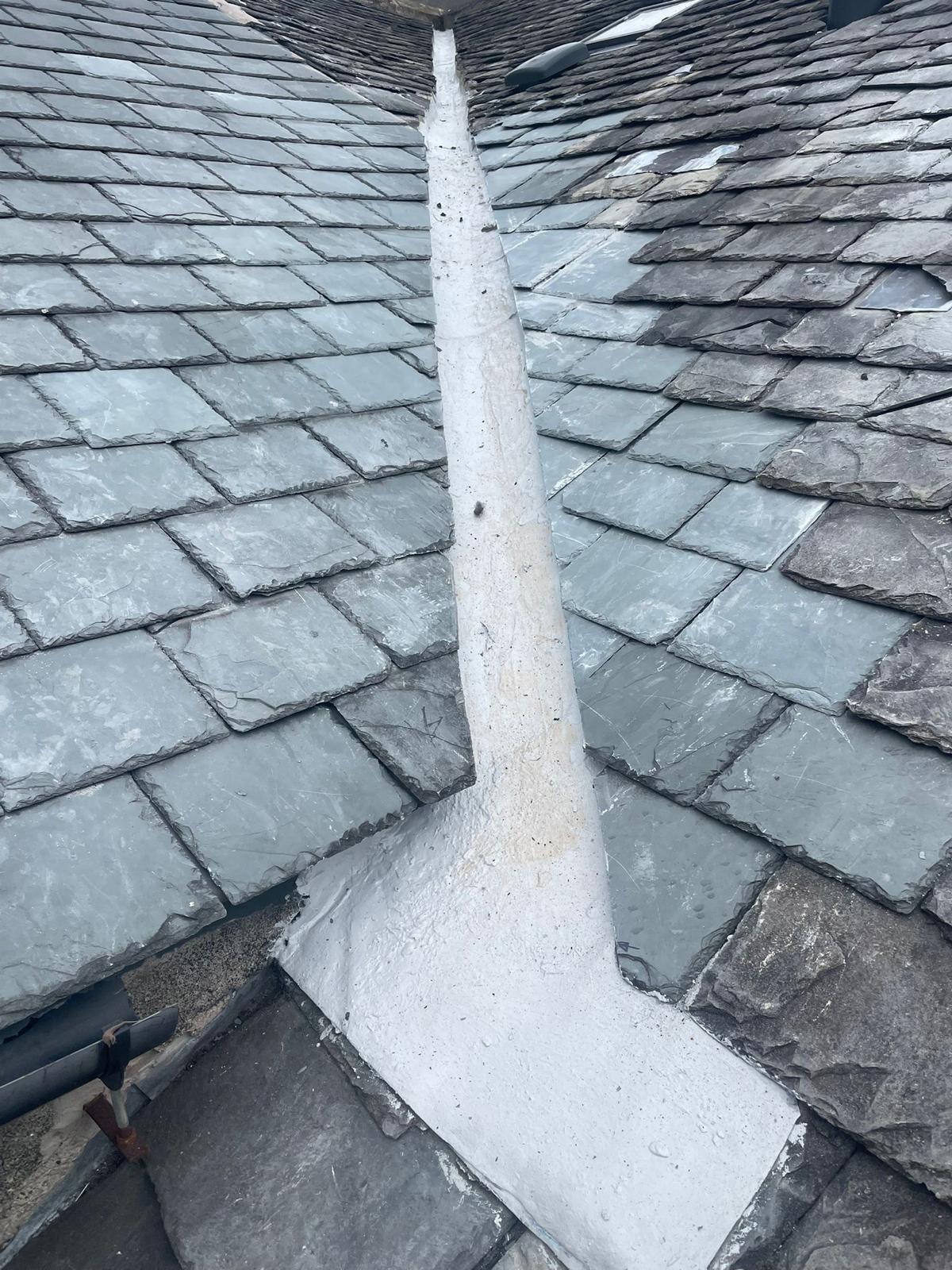
Full lead valley re-line on a stone-built lakeside cottage with a natural slate roof. Old corroded lead removed, new code 5 lead installed with welded joints, and slates re-cut to a clean valley line. View this project
GRP valley trough replacement on a 1970s semi-detached house following persistent leaks. Two adjoining troughs replaced with new moulded sections and tiles re-cut for improved water flow. View this project
Urgent repair to a blocked and overflowing valley on a holiday rental property during a heavy rain event. Valley cleared, cracked lead section patched, and tiles re-dressed to prevent recurrence. View this project
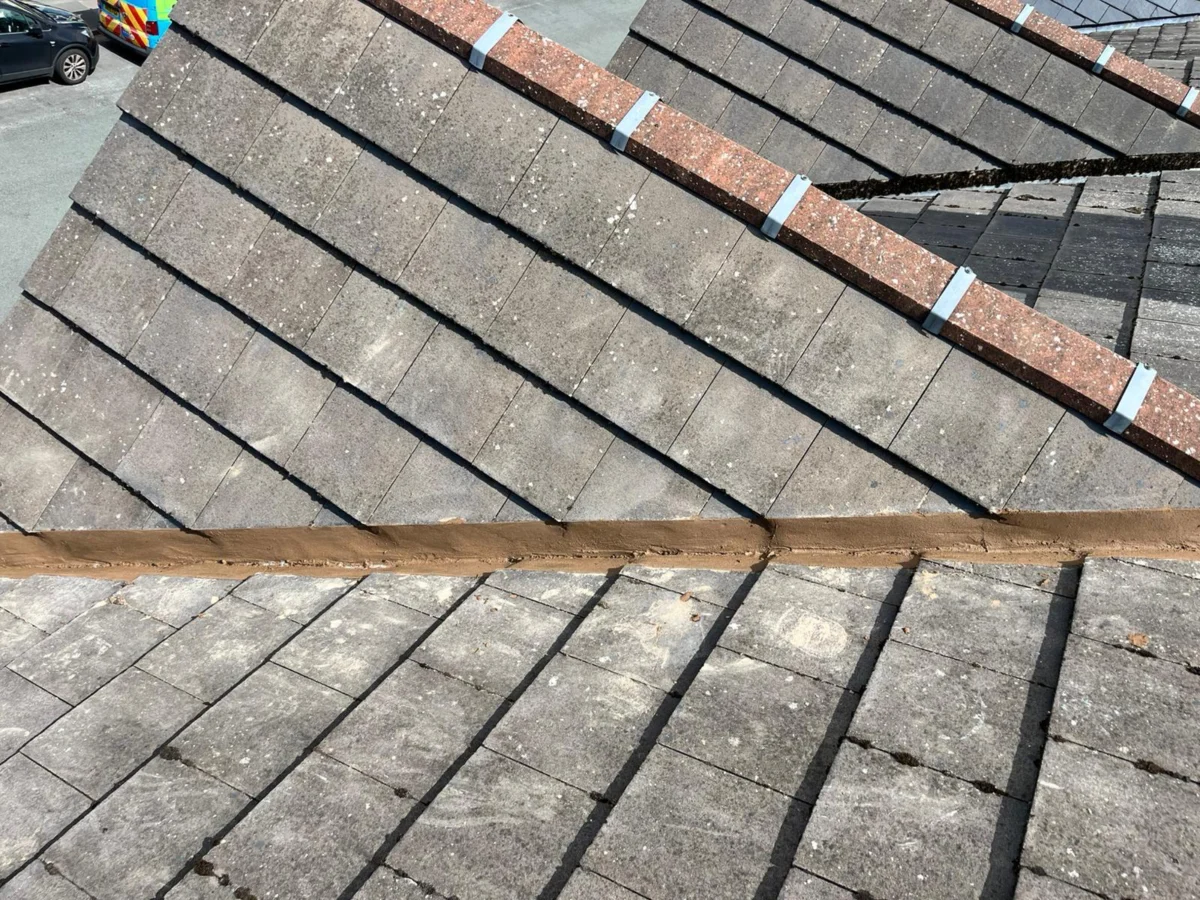
Mr Roofer UK provides expert roof valley repairs, re-lining, and replacement services across the whole of South and West Cumbria. Our team regularly works in Barrow-in-Furness, Ulverston, Dalton-in-Furness, Askam-in-Furness, Broughton-in-Furness, and Millom across the Furness peninsula. We cover the southern Lakes including Kendal, Windermere, Bowness-on-Windermere, Ambleside, Coniston, Hawkshead, and Grasmere.
Along the coast and into West Cumbria we serve Whitehaven, Workington, Cockermouth, Egremont, Cleator Moor, St Bees, Seascale, and Ravenglass. To the south we also reach Grange-over-Sands, Cartmel, Arnside, Kirkby-in-Furness, Haverigg, Sedbergh, Keswick, Penrith, and Carnforth. Visit our roofer Cumbria page for full coverage details.
A leaking valley will not fix itself, and every heavy rainfall makes the damage worse. Whether you need an emergency patch, a full re-line, or a comprehensive survey of all the valleys on your property, our team is ready to help. Book a free drone inspection today for a clear view of every valley on your roof, or call us for straightforward advice from an experienced local roofer.


Choose which cookies you are happy for us to use. You can change your mind at any time from the Cookie settings button.
Needed for the website to work and to keep it secure, for example remembering your cookie choices, keeping a basket or booking together and protecting forms from spam. These are always on.
Remember choices you make, such as how a list is displayed, so the site works the way you prefer.
Help us understand how visitors use the website so we can improve it.
Used by third-party services such as maps, videos and social media, which may track you across other websites.