

Ridge tiles sit at the highest point of the roof, fully exposed to wind, driving rain, and frost from every direction. The mortar bed that holds them in place absorbs moisture during wet weather, then expands and cracks when that moisture freezes overnight. In Cumbria, where we experience both high rainfall and frequent sub-zero temperatures between October and April, this freeze-thaw cycle can destroy ridge mortar in a fraction of the time it would take in drier, milder parts of the country. Once the mortar begins to crack and crumble, water penetrates into the roof space beneath, soaking insulation, staining ceilings, and accelerating timber decay in the ridge board and rafters.
A ridge tile that has lost its mortar bedding can be lifted and thrown by strong winds. Given that ridge tiles are typically heavy concrete or clay, a displaced tile falling from a two-storey roof represents a genuine danger to anyone below and can cause significant damage to the roof covering on its way down, smashing tiles or slates across several courses. We regularly attend emergency call-outs across South and West Cumbria after storms where ridge tiles have been displaced, and in most cases the problem could have been prevented with a timely repoint or dry ridge upgrade.
Traditional mortar bedding remains a perfectly valid method for fixing ridge tiles, provided the correct mortar mix is used and the work is carried out by an experienced roofer. However, dry ridge systems using mechanical clips and roll-out ventilation strips have become the industry standard for new-build roofing and are increasingly popular as a retrofit option on existing roofs. Dry ridges eliminate the need for mortar entirely, which means they never crack, never need repointing, and provide built-in ventilation to the roof space. We install both systems and advise on the best option for your property based on its age, roof type, exposure, and budget.
Our membership of the Roof Tile Association reflects our commitment to best-practice ridge installation methods. We are also City & Guilds certified, listed on the Lancashire County Council Safe Trader Scheme, and reviewed on Bark. Whether you need a quick mortar repair on a handful of loose ridges or a full dry ridge conversion across an entire roofline, you will receive professional service backed by our workmanship guarantee. Visit our roofer Cumbria hub for more, or explore our roof repairs page for the full range of pitched roof work we handle.
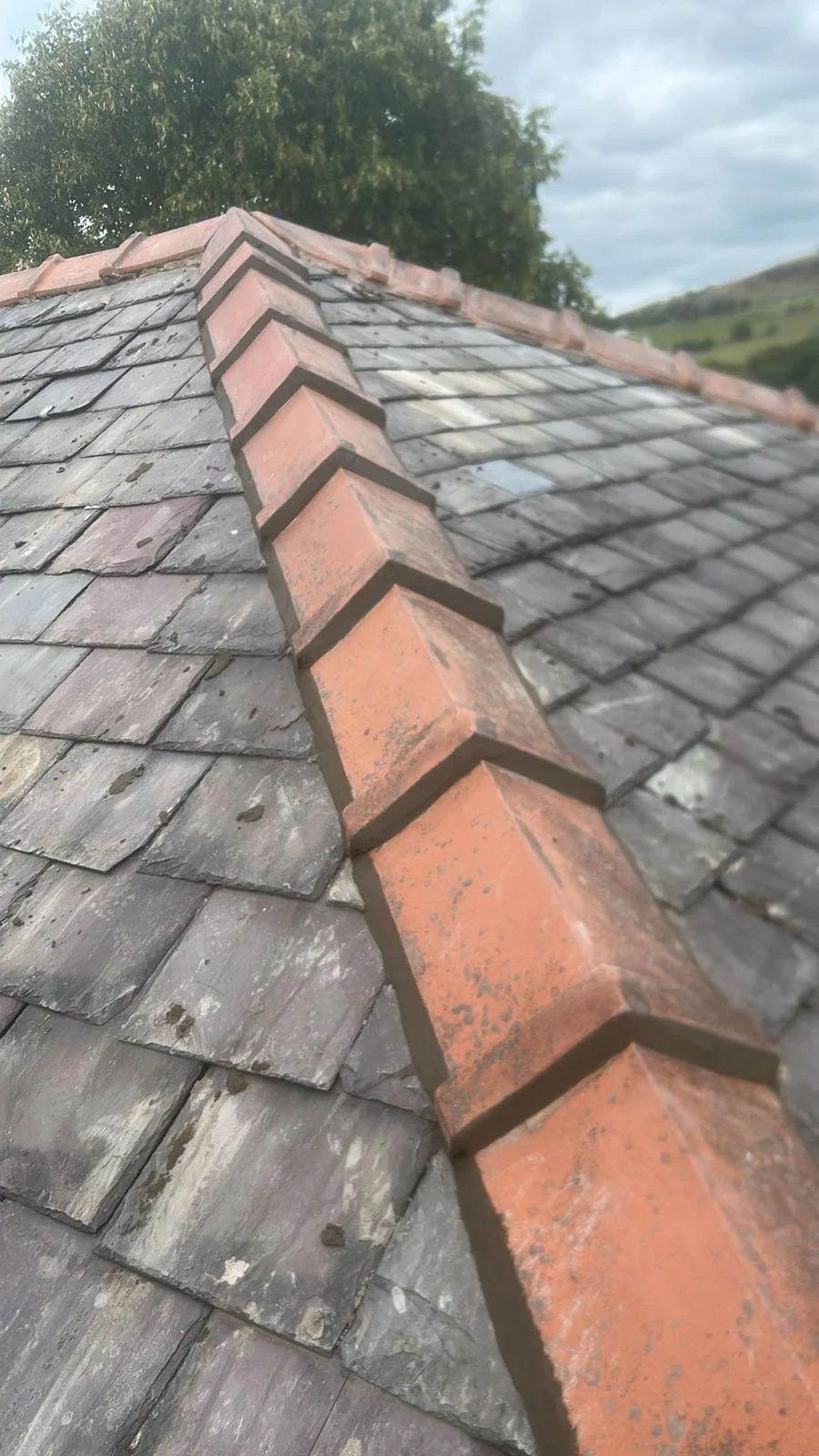
Look up at your ridge line from the ground. If you can see gaps where mortar has cracked away, dark lines where mortar has receded from the tile edges, or tiles that appear to be sitting at uneven angles, the bedding needs attention. Inside the loft, daylight visible along the ridge board and debris or mortar dust on the insulation are strong indicators. Our free drone inspection provides a detailed close-up view from directly above the ridge.
A dry ridge system replaces traditional mortar bedding with mechanical clips that screw into the ridge batten, holding each tile securely in place. A ventilated roll strip seals the gap beneath the tiles while allowing airflow into the roof space. The extra cost over a mortar repoint is modest and eliminates the need for any future repointing. In Cumbria, where mortar deteriorates faster due to frost and rain exposure, a dry ridge system typically pays for itself within 10 to 15 years.
On some single-storey roofs and bungalows we can carry out ridge work safely from a roof ladder without scaffolding, which reduces the overall cost. On two-storey properties, scaffolding or a tower scaffold is usually required to meet health and safety regulations and to provide a stable working platform for a quality result. We always include access costs in our quotations so there are no surprises.
A professional mortar repoint using frost-resistant mortar typically lasts 15 to 25 years in Cumbrian conditions, depending on the exposure of the property. Properties on hilltops or near the coast will experience faster deterioration than sheltered valley locations. A dry ridge system, by contrast, has no mortar to deteriorate and will last the lifetime of the tiles themselves, typically 40 to 60 years.
Yes. Verge mortar along gable ends deteriorates in exactly the same way as ridge mortar and is equally important for weather protection. We repair mortar verges using the same frost-resistant mortar we use for ridges, or we can upgrade to a dry verge system that clips to the last tile in each course and eliminates mortar maintenance entirely. Dry verges also prevent tiles from being lifted by wind at the exposed gable edge.
Yes. When mortar fails and gaps open beneath ridge tiles, wind-driven rain enters the roof space and soaks the insulation. Wet insulation loses its thermal performance, leading to higher heating bills, and the persistent moisture creates ideal conditions for timber rot in the ridge board and upper rafters. Over time this can develop into a significant structural issue that costs far more to repair than a timely ridge repoint would have cost.
Costs depend on the length of the ridge, the number of tiles involved, the mortar type or dry ridge system chosen, and the access requirements. A straightforward mortar repoint on a terraced house with a short ridge might cost a few hundred pounds including access. A full dry ridge conversion on a detached property with a long ridge line will be more substantial. We provide free, itemised quotations with no hidden charges and no obligation.
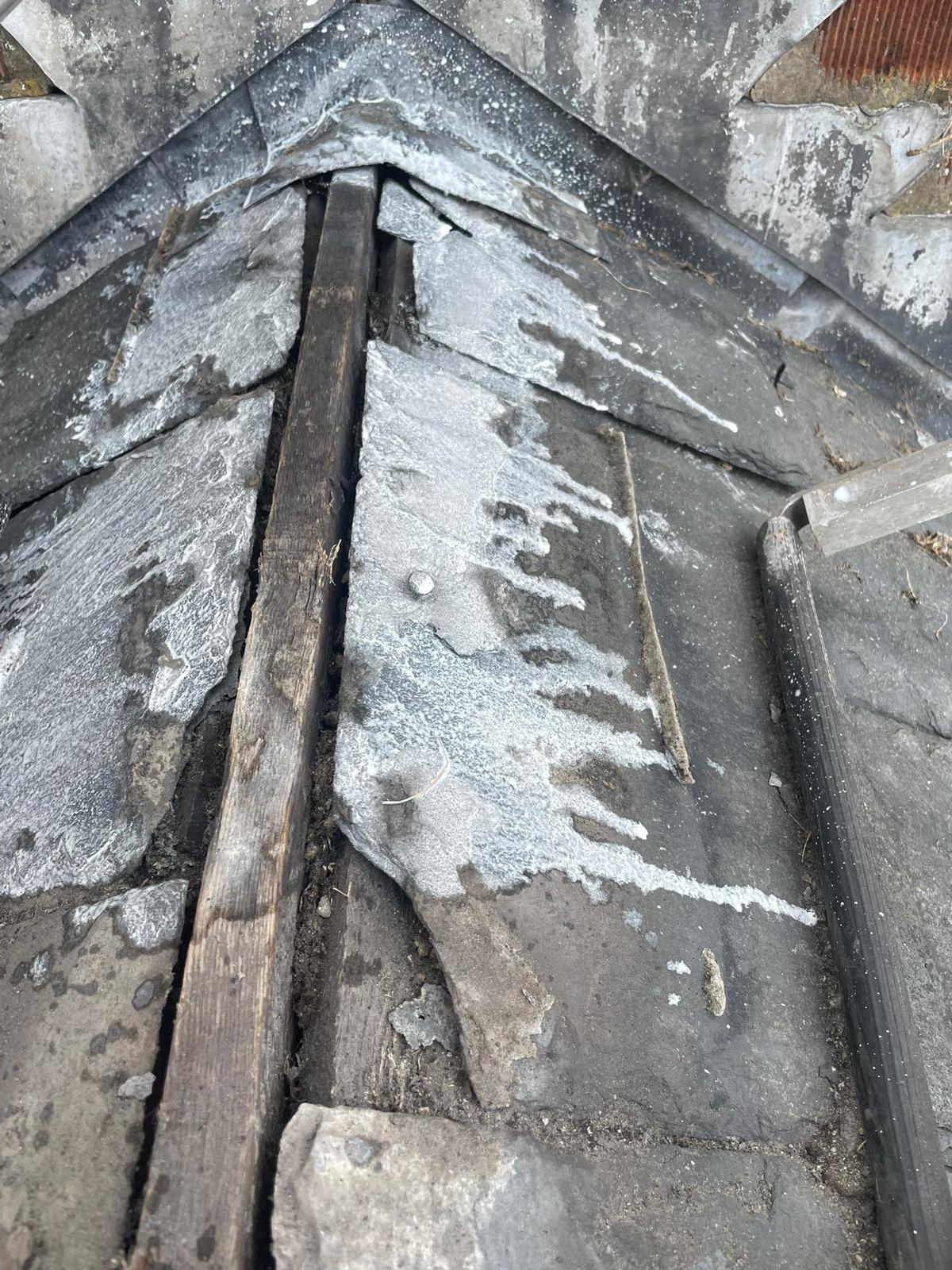
Full ridge repoint on a 1960s semi-detached using frost-resistant mortar colour-matched to the original bedding. All 24 ridge tiles re-bedded and pointed in a single day. View this project
Upgrade from traditional mortar bedding to a Manthorpe dry ridge system on a holiday cottage. Mechanical clips and ventilated roll fitted across the full ridge length for permanent, maintenance-free protection. View this project
Emergency re-bedding of displaced hip tiles following overnight storms. Three hip tiles re-seated on fresh mortar with stainless steel mechanical fixings for additional wind resistance. View this project
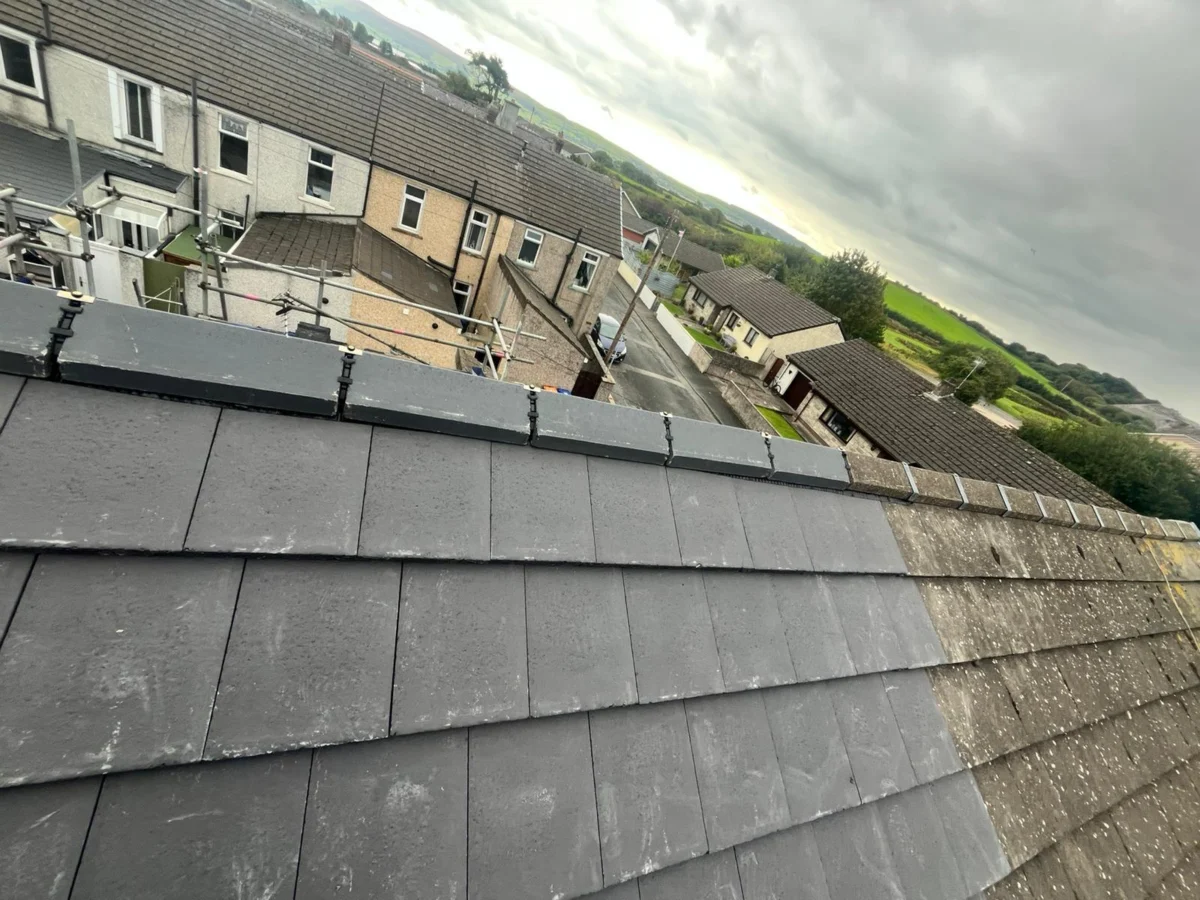
Mr Roofer UK provides expert ridge tile repointing and dry ridge installations across the whole of South and West Cumbria. Our team regularly works in Barrow-in-Furness, Ulverston, Dalton-in-Furness, Askam-in-Furness, Broughton-in-Furness, and Millom across the Furness peninsula. We cover the southern Lakes including Kendal, Windermere, Bowness-on-Windermere, Ambleside, Coniston, Hawkshead, and Grasmere.
Along the coast and into West Cumbria we serve Whitehaven, Workington, Cockermouth, Egremont, Cleator Moor, St Bees, Seascale, and Ravenglass. To the south we also reach Grange-over-Sands, Cartmel, Arnside, Kirkby-in-Furness, Haverigg, Sedbergh, Keswick, Penrith, and Carnforth. Visit our roofer Cumbria page for full coverage details.
Crumbling ridge mortar and loose tiles only get worse with each passing winter. Whether you need a straightforward repoint, a dry ridge upgrade, or emergency work after a storm, our team delivers lasting results at honest prices. Book a free drone inspection today for a clear picture of your ridge condition, or call us for immediate advice from an experienced local roofer.


Choose which cookies you are happy for us to use. You can change your mind at any time from the Cookie settings button.
Needed for the website to work and to keep it secure, for example remembering your cookie choices, keeping a basket or booking together and protecting forms from spam. These are always on.
Remember choices you make, such as how a list is displayed, so the site works the way you prefer.
Help us understand how visitors use the website so we can improve it.
Used by third-party services such as maps, videos and social media, which may track you across other websites.