

Every roof has vulnerable points where different surfaces meet: chimneys rising through tiles, walls abutting pitched roofs, dormer windows sitting within roof slopes, and valleys channelling water between intersecting rooflines. These junctions bear the brunt of Cumbria's relentless rainfall and are sealed with lead sheet that must be precisely cut, dressed, and fixed to remain watertight through decades of thermal movement, frost cycles, and wind exposure. Poor lead-work is responsible for more persistent roof leaks across South and West Cumbria than any other single cause, because water exploits even the smallest gap at a flashing joint and tracks deep into the building structure before becoming visible as damp.
Lead-work is a specialist trade within roofing. It requires an understanding of how lead sheet expands and contracts with temperature changes, how to size individual pieces to prevent fatigue cracking, and how to dress the material into brickwork and around complex shapes without overstretching. We regularly attend properties across Cumbria where previous contractors have used incorrect lead codes, skipped proper chase joints, relied on mastic sealant instead of mechanical fixings, or left exposed edges that lift in high winds. These shortcuts always fail eventually. Our team is trained in both traditional bossing techniques and modern welding methods to deliver lead-work that performs correctly from the outset.
Many of Cumbria's older properties, particularly those within the Lake District National Park and surrounding conservation areas, feature original lead roofing, gutters, and ornamental details that require specialist conservation knowledge to repair or replace. We work with reclaimed lead where appropriate and understand the planning requirements that apply to listed buildings. Whether it is a lead-lined parapet gutter on a Georgian townhouse in Kendal or step flashings on a slate-roofed farmhouse near Coniston, we match the character and specification of the original work.
Our City & Guilds certification covers lead-work as a core competency, and we are members of the LRWA (Liquid Roofing and Waterproofing Association) and the Lancashire County Council Safe Trader Scheme. Every lead installation comes with our workmanship guarantee and we use only certified lead sheet from reputable UK mills. Visit our roofer Cumbria hub for more about our credentials, or see our chimney repairs page for how lead-work integrates with our wider roofing services.
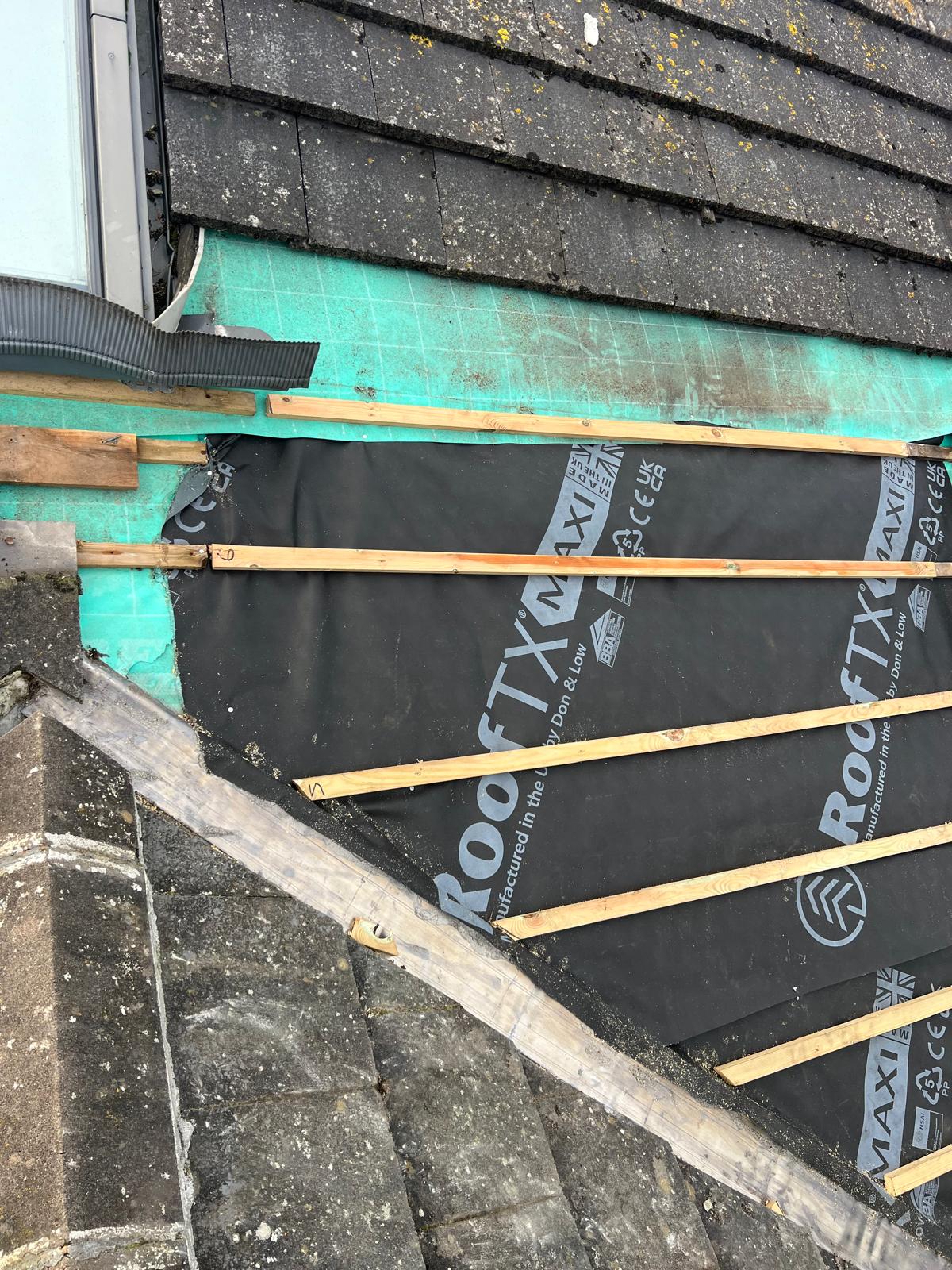
Properly installed lead flashing using the correct code of sheet and appropriate joint detailing will typically last 60 to 100 years or more. Lead is one of the most durable roofing materials available and actually improves its weather resistance over time as a protective patina forms on the surface. The most common cause of premature failure is incorrect installation rather than material deterioration, which is why specialist lead-work skills are essential.
The code number refers to the thickness of the lead sheet. Code 3 is the thinnest commonly used in roofing at 1.32mm, while code 8 is the thickest at 3.55mm. For most flashing applications we use code 4 (1.80mm) or code 5 (2.24mm). Valleys and flat areas typically require code 5 or code 6 to handle the greater thermal movement across wider pieces. Using the wrong code is a common cause of premature cracking and failure.
Yes, in many cases. Isolated cracks, small splits, and pin holes can be permanently repaired using lead welding techniques that fuse new lead directly to the existing sheet. Where lead has been patched with sealant or bitumen tape by previous contractors, we remove these temporary fixes and carry out proper welded repairs. However, if the lead is extensively fatigued with multiple cracks across a wide area, full replacement is the more cost-effective long-term solution.
The most common causes are inadequate fixings where lead wedges were not used in the chase joints, mortar pointing that has cracked and fallen out, thermal expansion forcing the lead out of shallow chases during hot weather, and wind suction lifting unsecured edges during storms. We refix lifted flashings by raking out the existing chase to a minimum depth of 25mm, re-dressing the lead, inserting proper lead wedges at close centres, and re-pointing with flexible sealant.
For durability, workability, and longevity there is no material that matches lead at roof junctions. Plastic flashings and self-adhesive strips are cheaper but have a fraction of the lifespan, become brittle in UV exposure, and cannot be dressed tightly into complex shapes. GRP fibreglass is excellent for flat roof surfaces but is not suitable for the flexible junction details that lead handles so well. For any serious roofing project, lead remains the professional standard.
Yes. We regularly carry out lead-work on listed buildings and properties in conservation areas across the Lake District and South Cumbria. We use traditional bossing techniques and reclaimed lead where required by planning conditions, and we can liaise with conservation officers on your behalf regarding specifications and approvals. Our experience with heritage properties means we understand the additional care and documentation these projects require.
The cost depends on the length and complexity of the flashing run, the code of lead required, access arrangements, and whether associated work such as chimney repointing or tile re-laying is needed at the same time. Simple step flashing replacement on one side of a chimney might cost a few hundred pounds, while a full set of flashings and back gutter on a large stack will be more. We provide free, itemised quotations so you know exactly what each element costs.
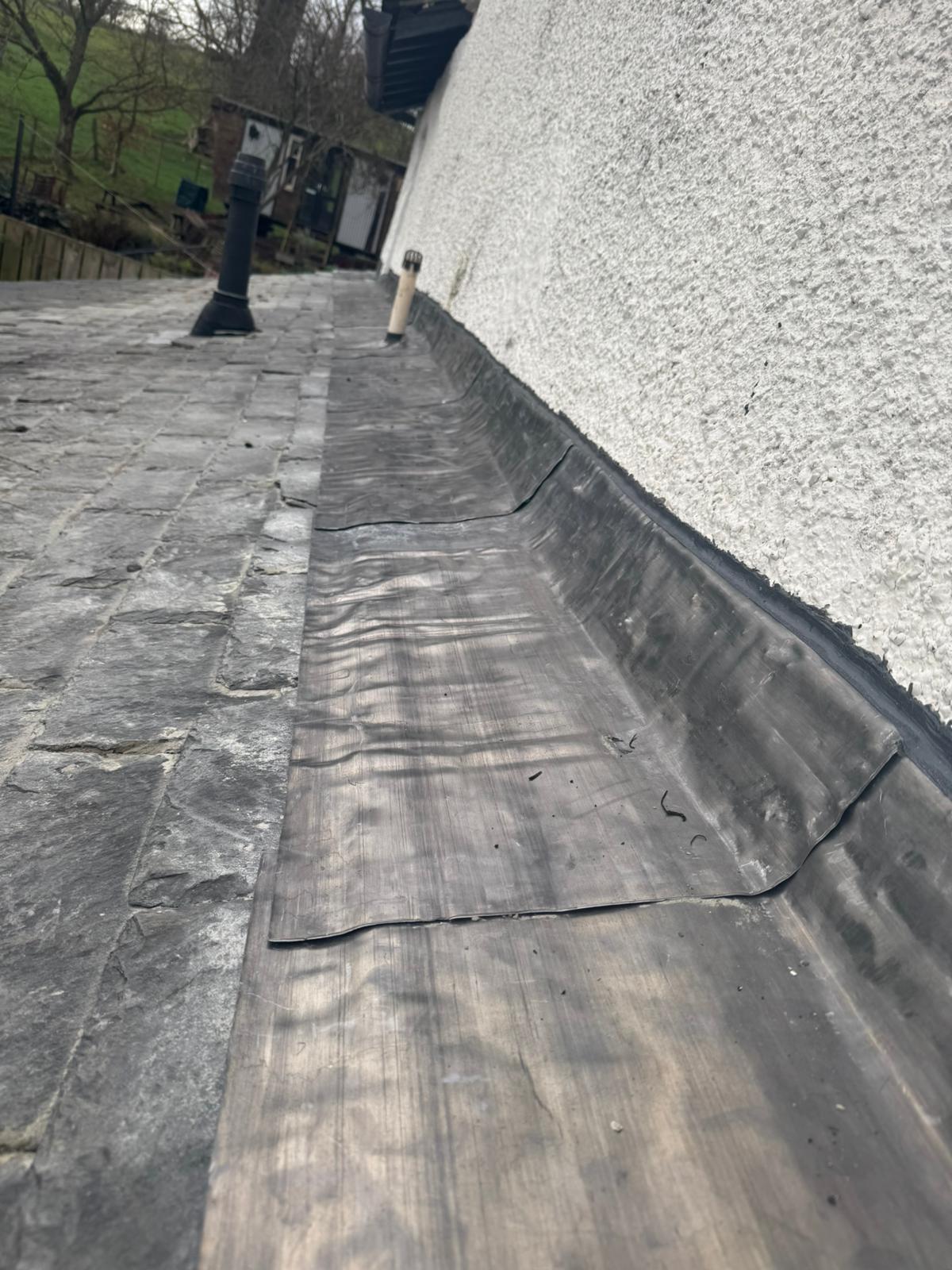
Complete replacement of step flashings, back gutter, and apron on a lakeside detached property. Code 5 lead dressed into raked chases with lead wedge fixings throughout. View this project
New lead-lined open valley on a semi-detached house where the original valley had corroded through after 80 years. New code 5 lead with welded joints and tile soakers re-fitted. View this project
Flat lead roof replacement on a Victorian bay window suffering from persistent leaks. Old lead stripped, new code 6 lead laid with correctly spaced expansion joints and welded drips. View this project

Mr Roofer UK provides expert lead-work and flashing services across the whole of South and West Cumbria. Our team regularly works in Barrow-in-Furness, Ulverston, Dalton-in-Furness, Askam-in-Furness, Broughton-in-Furness, and Millom across the Furness peninsula. We cover the southern Lakes including Kendal, Windermere, Bowness-on-Windermere, Ambleside, Coniston, Hawkshead, and Grasmere.
Along the coast and into West Cumbria we serve Whitehaven, Workington, Cockermouth, Egremont, Cleator Moor, St Bees, Seascale, and Ravenglass. To the south we also reach Grange-over-Sands, Cartmel, Arnside, Kirkby-in-Furness, Haverigg, Sedbergh, Keswick, Penrith, and Carnforth. Visit our roofer Cumbria page for full coverage details.
Whether you have a leaking chimney flashing, a corroded lead valley, or a heritage property that needs specialist attention, our experienced team delivers lead-work that lasts. We offer free drone inspections to assess your lead-work without scaffolding, and every quotation is detailed, transparent, and obligation-free. Call us today or book online for honest advice from a qualified local Cumbrian roofer.


Choose which cookies you are happy for us to use. You can change your mind at any time from the Cookie settings button.
Needed for the website to work and to keep it secure, for example remembering your cookie choices, keeping a basket or booking together and protecting forms from spam. These are always on.
Remember choices you make, such as how a list is displayed, so the site works the way you prefer.
Help us understand how visitors use the website so we can improve it.
Used by third-party services such as maps, videos and social media, which may track you across other websites.